

Real Experiences, Scientific Evidence
Practical Ways to Transform Your Life
What if changing your life didn’t require changing everything around you? The spiritual awakening resources gathered here offer practical ways to explore that possibility.
What if some of the most meaningful changes began with something much simpler: learning to experience your thoughts, emotions, and everyday circumstances differently? Through meditation, mindfulness, and greater self-awareness, you can discover new ways to understand your mind and approach life from a fresh perspective.
Perhaps you’ve struggled with anxiety, stress, uncertainty, or a persistent feeling that something is missing.
Perhaps you’ve wondered whether meditation, mindfulness, or other approaches to personal transformation actually work—or whether they’re simply attractive ideas that sound better than they perform.
These are reasonable questions.
At Quantum Quirks, we explore some of life’s greatest mysteries, including consciousness, the nature of reality, and the relationship between science and spirituality.
But we also believe that exploring consciousness should have practical value.
Understanding your mind is interesting. Learning to work with it can change your life.
And there is evidence that some of these approaches can help.
Not every technique works for everyone. Not every extraordinary testimonial represents a typical result. And not every claim made about personal transformation is supported by science.
Nevertheless, research and personal experiences suggest that meaningful changes are possible.
Let’s explore what those changes might look like.
















Can meditation really change
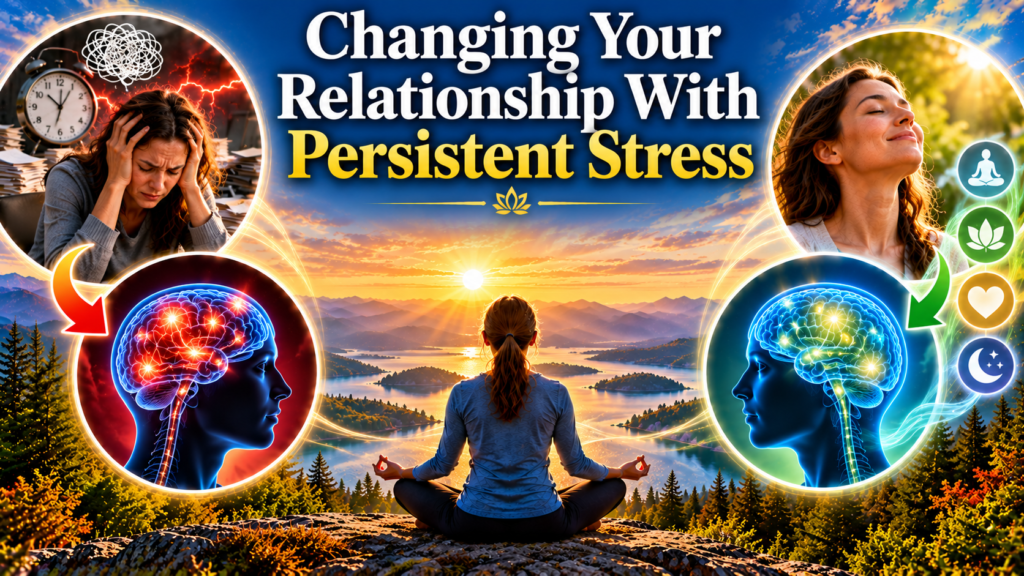
how we respond to stress?
Imagine two people experiencing exactly the same stressful situation.
Both receive unexpected bad news.
One becomes overwhelmed by worry, imagining everything that might go wrong.
The other feels the same initial concern but manages to pause, assess the situation, and respond more calmly.
The difference isn’t necessarily their circumstances.
It may be their relationship with their thoughts.
Mindfulness teaches us to recognize thoughts and emotions without immediately becoming caught up in them.
Instead of automatically treating every worrying thought as an urgent problem, we can learn to observe it.
That small change can create room for a more deliberate response.
What does the science say?
A systematic review published in JAMA Internal Medicine examined 47 clinical trials involving 3,515 participants.
Researchers found evidence that mindfulness meditation programmes produced modest improvements in anxiety, depression, and pain.
The findings did not establish that meditation was superior to established active treatments, but they did indicate that meditation can offer meaningful benefits.
The important discovery is that our habitual responses to stress are not necessarily permanent.
They can sometimes be changed through practice.
A real experience
Carol Harrison, a participant in Giovanni Dienstmann’s Live and Dare programmes, described experiencing considerable anxiety and unhappiness before undertaking meditation training.
She subsequently reported improvements in her wellbeing, stress levels, energy, and creativity.
Her experience illustrates something important.
The goal isn’t necessarily to eliminate every stressful event.
It’s to become better equipped to handle life’s inevitable challenges.
Practical tool: Mindfulness meditation.
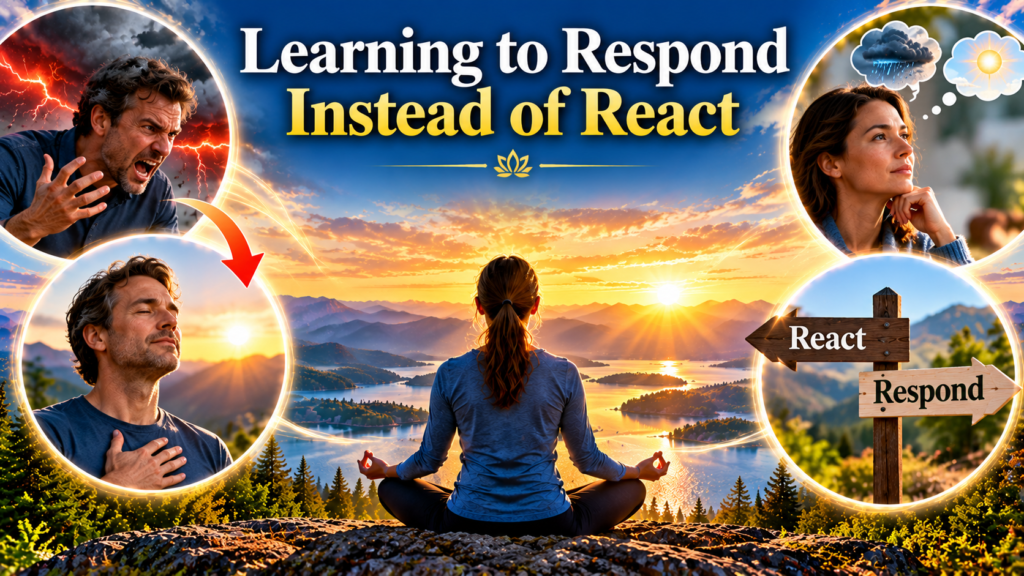
What if you could create a pause
between emotion & action?
Think about the last time someone said something that upset you.
Perhaps you responded immediately, only to regret your words afterward.
Most of us have experienced this.
An emotion arises, and before we’ve fully recognized what’s happening, we’ve acted upon it.
Meditation can help develop the ability to notice emotional reactions earlier.
That doesn’t mean suppressing anger, sadness, or frustration.
It means recognizing those feelings without automatically allowing them to determine our behaviour.
Over time, this awareness may help us communicate more thoughtfully, handle disagreements more constructively, and avoid unnecessary conflict.
A real experience
Michael Soguero describes arriving at Live and Dare uncertain about how to begin meditating or which technique to choose.
After following the programme, he established a daily practice and reported becoming less reactive.
His experience is particularly interesting because the change he describes isn’t mystical or difficult to understand.
It’s practical.
He learned to pause more often.
And sometimes, a pause is all we need to make a better decision.
Try this today
The next time you feel irritated or anxious:
Notice the emotion without judging yourself.
Take three slow, comfortable breaths.
Ask yourself: What response would be most helpful right now?
Give yourself permission to respond deliberately rather than immediately.
This simple exercise won’t solve every problem.
But practising it regularly may help you recognize that an emotional reaction doesn’t always have to become an action.
Practical tool: Breath awareness and emotional mindfulness.


Will a change in your mental habits
change your experience of daily life?
Many people spend considerable time mentally revisiting the past or anticipating the future.
We replay conversations.
We worry about events that haven’t happened.
We imagine difficulties that may never materialize.
Although planning and reflection are useful, excessive rumination can make ordinary life feel exhausting.
Meditation and related attention-training practices offer another possibility.
They teach us to recognize when our attention has wandered into unproductive mental activity and gently return it to the present.
This isn’t about pretending problems don’t exist.
It’s about learning when thinking is useful—and when it has become an unnecessary burden.
A real experience
John Butler, another Live and Dare participant, reported improvements in concentration, awareness, relaxation, and stress management.
He also described finding greater meaning through meditation.
That combination is worth considering.
People don’t always begin meditation because they’re seeking spiritual insight.
Sometimes they simply want to feel less overwhelmed.
Yet learning to become more attentive to everyday experience may also change what they value and how they understand themselves.
Practical tool: Daily meditation and present-moment awareness.
What about brain retraining?
Some approaches to personal transformation go beyond conventional meditation.
They combine attention training, relaxation, emotional regulation, visualization, and exercises intended to interrupt habitual patterns of stress.
One example is the Gupta Program, developed by Ashok Gupta.
The programme is designed primarily for people dealing with certain chronic health conditions and associated difficulties.
Its methods emphasize changing patterns of attention, emotional response, and perceived threat.
The underlying idea is that repeated patterns of stress and vigilance can influence how people experience their symptoms and daily lives.
However, an important distinction must be made.
Evidence that stress affects wellbeing does not establish that a particular brain-retraining programme can cure a medical condition.
Chronic illnesses have complex causes, and individual experiences vary considerably.
A real experience
Thomas Henry, whose experience appears on the Gupta Program website, reported:
“My fatigue levels were a lot lower.”
He also described improvements in anxiety and stress after practising the techniques.
Another participant, Dian, reported regaining a greater degree of independence and everyday functioning.
These experiences are encouraging, but they remain personal accounts. They do not establish that everyone will obtain similar results or that the programme caused every improvement.
For someone struggling with ongoing stress, however, learning techniques that support relaxation and emotional regulation may be worth exploring alongside appropriate professional care.
Practical tool: Guided brain-retraining exercises, meditation, and stress-management techniques.

Is personal transformation about
more than feeling better?
Sometimes the problem isn’t anxiety or stress.
Sometimes life simply feels repetitive.
We move through familiar routines, meet our responsibilities, and wonder whether there should be something more.
Contemplative traditions have explored this question for centuries.
Meditation can provide opportunities to examine our priorities, habits, and assumptions.
Instead of continually reacting to external demands, we may begin asking deeper questions.
What really matters to me?
Am I living according to my values?
Which of my beliefs are helping me—and which might be holding me back?
These questions don’t require religious faith or belief in anything supernatural.
They require curiosity and a willingness to examine our own experience.
The Ram Dass approach
Ram Dass encouraged people to explore awareness, compassion, and the possibility of relating differently to their thoughts and sense of identity.
His teachings emphasize that spiritual practice isn’t merely about having unusual experiences.
It’s also about how we treat ourselves and other people.
The Ram Dass Library offers teachings and practices for people interested in this approach.
Some visitors may find the spiritual language deeply meaningful.
Others may prefer to approach the material simply as an invitation to become more aware, compassionate, and present.
Both approaches are welcome.
Practical tool: Contemplative meditation, self-inquiry, and compassion practices.

What Do People Actually Experience?
Real People. Real Experiences. Meaningful Changes.
What happens when people begin practising meditation, mindfulness, positive visualization, and other techniques for personal transformation?
The answers are as varied as the people themselves.
Some describe becoming calmer and less anxious. Others report greater confidence, improved concentration, more restful sleep, or a renewed sense of purpose.
And sometimes the changes are surprisingly ordinary.
A person who once reacted angrily to criticism learns to pause before responding.
Someone who spent years worrying about the future discovers moments of genuine peace in the present.
Another person begins each morning with a clearer sense of direction and a more positive outlook.
These may not sound like extraordinary transformations.
But consider how much difference they could make when repeated throughout an entire lifetime.
What meditation practitioners tell us
Giovanni Dienstmann, founder of Live and Dare, has helped people develop meditation practices intended to improve attention, emotional regulation, and everyday wellbeing.
Participants have described becoming more patient, less reactive, and better able to manage difficult emotions.
For example, Carol Harrison reported improvements in her anxiety and general wellbeing after participating in meditation training.
Michael Soguero described developing a regular meditation practice and becoming less reactive.
John Butler reported improvements in concentration, relaxation, and stress management.
These are individual testimonials, not guarantees of particular results. Nevertheless, they illustrate the kinds of practical changes that motivate people to explore meditation.
What about manifestation?
Manifestation is another approach that attracts considerable interest.
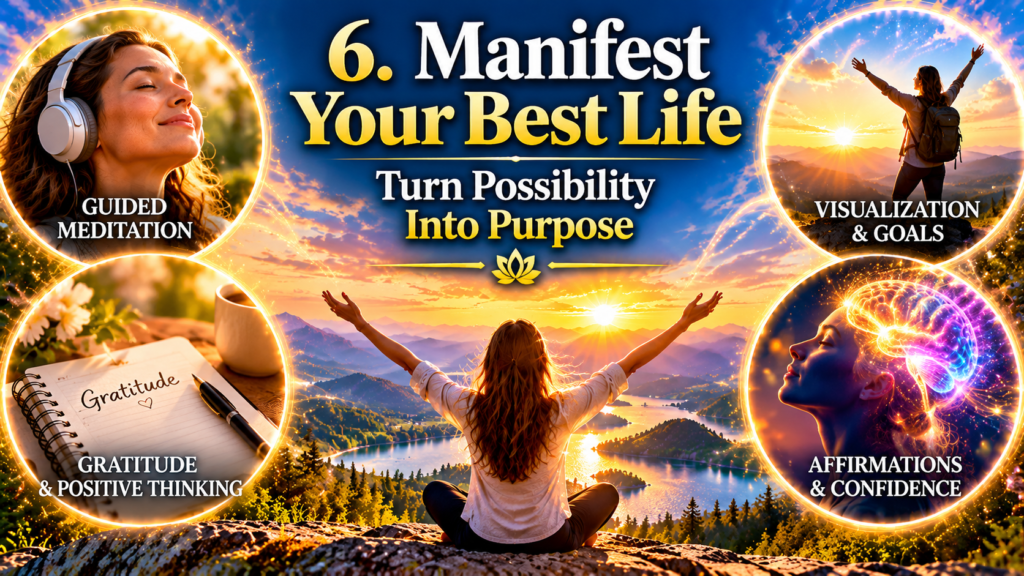
At its most practical, manifestation involves identifying what matters to you, imagining a desired outcome, examining beliefs that may be holding you back, and taking deliberate action toward your goals.
The Manifesty platform brings together guided meditations, visualization exercises, affirmations, gratitude practices, and personal-development lessons.
Its published member testimonials describe improvements in confidence, clarity, motivation, and consistency.
For example, a member identified as Lisa P. reports gaining confidence and greater peace through guided meditation and personal-development lessons.
Another member, Emily J., describes using clarity exercises and action-oriented guidance to pursue her goals.
These reports are encouraging, although they do not establish that thoughts alone can produce external events.
The practical value of manifestation may begin with something we can all understand: becoming clearer about what we want and more intentional about what we do.
And that brings us to an important question.
If people report these changes, what does science have to say?


Books To Challenge How You See Reality
Explore Consciousness and Spirituality
Sometimes a single idea changes the direction of our thinking.
A book introduces us to a question we’ve never considered.
A scientific discovery challenges something we assumed was obvious.
Or a spiritual teaching encourages us to examine the meaning of our own existence.
At Quantum Quirks, we believe some of life’s most fascinating questions deserve more than a passing glance.
What is consciousness?
Why do we experience an inner world of thoughts, emotions, and awareness?
Is consciousness entirely produced by the brain?
Could our understanding of reality be incomplete?
And what happens when scientific investigation encounters experiences that remain difficult to explain?
Our books explore these questions from different perspectives.
They are written for curious readers who enjoy considering possibilities, examining evidence, and thinking beyond familiar assumptions.
Spirit in a Lab Coat — Where Science Meets Spirituality
Science has transformed our understanding of the universe.
We know that matter consists of atoms, that the cosmos contains billions of galaxies, and that the physical world operates according to principles that earlier generations could scarcely have imagined.
Yet some of the deepest questions remain unanswered.
Why does subjective experience exist?
What is the relationship between consciousness and physical reality?
And can scientific investigation tell us everything there is to know about existence?
Spirit in a Lab Coat explores the intriguing territory where scientific discoveries and spiritual perspectives intersect.
It considers unconventional ideas while encouraging readers to distinguish established scientific findings from interpretation and speculation.
The purpose isn’t to prove that every spiritual belief is correct.
It’s to ask whether our current understanding of reality might still be incomplete.
Is AI Conscious? — A Question for the Modern World
Artificial intelligence has brought the consciousness debate into an entirely new era.
Modern AI systems can hold conversations, write stories, analyze information, and solve complicated problems.
Some can produce responses that appear thoughtful, emotional, or self-aware.
But does intelligent behaviour mean that a system actually experiences anything?
Could a machine ever possess subjective awareness?
And how would we recognize consciousness if it appeared in a form very different from our own?
Is AI Conscious? examines these questions and the philosophical challenges surrounding artificial intelligence and subjective experience.
It’s a subject that becomes more fascinating as AI capabilities continue to develop.
The Kryon Journey — Exploring a Spiritual Perspective
Not every question about human existence can currently be answered through scientific experimentation.
Throughout history, people have also turned to philosophy, spirituality, and contemplative traditions.
The Kryon Journey explores teachings associated with Kryon, channelled by Lee Carroll.
The book considers spiritual perspectives on human potential, personal choice, consciousness, and the nature of reality.
These ideas are presented as spiritual teachings rather than scientifically established facts.
For readers interested in exploring alternative perspectives on existence, the book offers a substantial journey through a distinctive body of material.
Why Read About Consciousness?
Because the questions are about you.
Every experience you’ve ever had—every memory, emotion, dream, and thought—has appeared within consciousness.
Yet consciousness itself remains one of the most challenging subjects in philosophy and science.
We can investigate the brain.
We can measure neural activity.
We can study behaviour.
But explaining why physical processes are accompanied by subjective experience remains an extraordinary intellectual challenge.
Our books invite you to participate in that investigation.
You don’t have to agree with every idea.
In fact, questioning the material is part of the adventure.
Discover the Quantum Quirks Books
Whether you’re interested in the scientific study of consciousness, artificial intelligence, spiritual philosophy, or the possibility that reality is more complex than it appears, there’s something here to explore.


Create Your Own Sanctuary of Peace
Discover the Spiritual Shoppe
Mindfulness, Meditation, and Meaningful Gifts
Imagine having a small corner of your home dedicated to peace and reflection.
Somewhere you can step away from the demands of everyday life.
A place where you can sit quietly, collect your thoughts, practise meditation, or simply enjoy a few moments without distraction.
You don’t need an elaborate meditation room.
You don’t need expensive equipment.
And you certainly don’t need to surround yourself with objects that promise supernatural powers.
Sometimes a comfortable chair, a little soft lighting, and a few personally meaningful items are enough.
Our Spiritual Shoppe is intended to help visitors discover products that complement meditation, mindfulness, relaxation, and spiritual exploration.
Meditation Accessories
A regular meditation practice can become easier to maintain when you have a comfortable, inviting place to practise.
Cushions, supportive seating, and other accessories may help create an environment that encourages you to return each day.
The accessories themselves don’t produce enlightenment.
Their value lies in helping you establish a comfortable routine.
Singing Bowls — A Sound That Invites Stillness
Singing bowls have long been associated with contemplative and spiritual practices.
Their resonant tones can provide a focal point for attention.
Some people enjoy sounding a bowl at the beginning of meditation, allowing the tone to fade naturally before settling into silence.
Others use the sound to mark the end of a practice.
While claims about special healing frequencies require scientific scrutiny, many people simply appreciate the beauty and atmosphere of the sound.
Affirmation Cards — Encouragement for Everyday Life
A thoughtfully chosen affirmation can provide a useful reminder of the qualities we want to cultivate.
Patience.
Courage.
Gratitude.
Self-compassion.
Confidence.
Affirmation cards can be placed beside a desk, near a mirror, or in a meditation space.
Their purpose is simple: to encourage a moment of reflection.
Mindfulness Cards — Small Reminders to Be Present
Mindfulness doesn’t have to happen only while sitting with your eyes closed.
It can happen while drinking tea, walking outdoors, listening to another person, or noticing your breathing.
Mindfulness cards often provide simple prompts that encourage greater awareness of ordinary experiences.
They can also make thoughtful gifts for someone interested in personal development.
Crystals and Spiritual Jewellery
Crystals and symbolic jewellery are popular among people who enjoy spiritual traditions and meaningful personal objects.
Some associate particular stones with qualities such as peace, confidence, or emotional balance.
These associations belong primarily to spiritual and cultural traditions; reliable scientific evidence does not establish that crystals possess the healing powers sometimes claimed for them.
Nevertheless, a bracelet or decorative stone can serve as a personal reminder of an intention.
A person might wear a bracelet as a reminder to respond patiently when frustrated.
The value in that example comes from the intention and behaviour—not from a demonstrated supernatural property of the stone.
Make Your Meditation Space Your Own
There’s no correct way to create a peaceful environment.
Some people prefer simplicity.
Others enjoy candles, music, artwork, plants, or decorative objects.
What matters is finding an arrangement that feels comfortable and encourages regular moments of reflection.
Explore the Spiritual Shoppe
If you’re looking for meditation accessories, mindfulness gifts, affirmation cards, singing bowls, or symbolic spiritual items, our Spiritual Shoppe offers ideas worth exploring.


Explore the Mysteries of Consciousness Through Video
Discover Quantum Quirks — Where Science, Spirituality, and Curiosity Meet
Some questions are simply too fascinating to ignore.
What is consciousness?
Could reality be fundamentally different from the way we perceive it?
Why do human beings report extraordinary spiritual experiences?
What happens when the brain stops functioning?
Could artificial intelligence ever become conscious?
And what can modern science genuinely tell us about these mysteries?
Quantum Quirks explores questions like these through videos designed to make complicated subjects interesting and accessible.
Consciousness — The Greatest Mystery of All?
Think about something remarkable.
You are reading these words.
You understand their meaning.
And somewhere within that experience, there is an awareness of being you.
We can study the brain activity associated with reading and understanding language.
But the deeper question remains:
Why is there a subjective experience accompanying those processes?
This question lies at the heart of consciousness research.
Our videos explore scientific theories, philosophical arguments, and spiritual perspectives that attempt to address it.
Near-Death Experiences
Some people who have survived life-threatening medical emergencies report extraordinary experiences.
These may include sensations of leaving the body, encountering light, experiencing profound peace, or reviewing significant events from their lives.
Researchers continue to investigate these reports.
Possible explanations include neurological, psychological, and physiological processes, although individual experiences may remain difficult to interpret.
Our videos examine the claims, the evidence, and the questions that remain open.
Reincarnation and Past-Life Memories
Accounts of apparent past-life memories have fascinated people across cultures.
Some researchers have documented cases involving children who describe experiences they associate with previous lives.
How should these reports be understood?
Could they reflect memory errors, suggestion, cultural influences, or other psychological processes?
Or do some cases raise questions that deserve further investigation?
We explore these possibilities without assuming that any single explanation has been established.
Quantum Physics and Spirituality
Quantum physics reveals a physical world that often behaves very differently from everyday intuition.
But does quantum physics support spiritual claims about consciousness?
This is an area where fascinating science is sometimes mixed with considerable speculation.
At Quantum Quirks, we enjoy exploring possible connections while distinguishing actual scientific findings from imaginative interpretations.
The mysteries of quantum mechanics are remarkable enough without needing to exaggerate them.
Spiritual Awakening Resources for Meditation and Personal Growth
Our interests aren’t limited to theoretical questions.
We also explore ideas that may have practical relevance to everyday life.
Meditation.
Mindfulness.
Personal responsibility.
Spiritual reflection.
And the possibility that understanding ourselves more deeply can influence how we live.
Watch at Your Own Pace
One of the advantages of video is that you can explore an idea whenever it suits you.
Watch a short introduction.
Listen to a longer discussion.
Pause to consider a question.
Or follow a series that examines a subject in greater depth.
You don’t need a scientific background or previous knowledge of spiritual philosophy.
You only need curiosity.
Discover Quantum Quirks Videos
If you enjoy exploring the relationship between science, consciousness, spirituality, and the mysteries of existence, our video collection offers plenty to investigate.


What Do People Actually Experience?
The Everyday Changes That Make Meditation
and Mindfulness Worth Exploring
We’ve explored meditation, emotional wellbeing, healing, manifestation, and the many resources available to help people make positive changes in their lives.
But there’s an important question we haven’t yet addressed.
What actually happens when ordinary people begin putting these ideas into practice?
Do they experience dramatic transformations?
Do they suddenly become happier, healthier, or more confident?
Or are the changes often quieter and less obvious?
The answer is that experiences vary enormously.
Some people report meaningful improvements in their daily lives.
Others notice relatively little change.
And some discover that a particular technique simply isn’t right for them.
Understanding these differences is an important part of approaching personal transformation with realistic expectations.
Sometimes the Changes Are Small — but Significant
Imagine someone who regularly becomes frustrated while sitting in traffic.
Previously, every delay might have produced irritation, tension, and angry thoughts.
After practising mindfulness for several weeks, that person might begin noticing the frustration as it arises.
The traffic hasn’t changed.
The delay hasn’t disappeared.
But their response may be different.
Instead of spending twenty minutes feeling increasingly angry, they might recognize the emotion, take a few comfortable breaths, and allow the experience to pass.
That may not sound like a dramatic spiritual awakening.
But imagine experiencing similar changes in dozens of everyday situations.
A difficult conversation.
An unexpected disappointment.
A disagreement with someone you love.
A worrying thought that keeps returning.
Small changes in how we respond to these experiences can gradually influence our quality of life.
And sometimes, that’s where meaningful personal transformation begins.
Commonly Reported Benefits
People who practise meditation and mindfulness sometimes describe improvements in several areas of everyday life.
These may include:
Greater emotional awareness: Recognizing feelings before reacting automatically.
Reduced stress: Feeling better able to manage some stressful situations.
Improved concentration: Finding it easier to notice distractions and return attention to the task at hand.
More patience: Becoming less reactive during disagreements or frustrating experiences.
Better sleep: Feeling more relaxed before bedtime.
Greater self-awareness: Recognizing recurring patterns of thought and behaviour.
Increased appreciation: Paying more attention to ordinary experiences that bring satisfaction or enjoyment.
A stronger sense of purpose: Becoming clearer about personal values and priorities.
These are commonly reported experiences, not guaranteed results.
Some benefits are supported by scientific research more strongly than others.
Individual experiences also depend on the technique, the person practising it, their circumstances, and many other factors.
Nevertheless, these reports help explain why meditation and mindfulness continue to attract interest around the world.
What About Testimonials?
If you’ve explored meditation, healing, or personal-development programmes online, you’ve probably encountered testimonials.
Someone describes overcoming a difficult period.
Another reports feeling calmer or more confident.
Someone else believes a particular programme helped them make an important change.
Such stories can be encouraging.
They can also help us understand what participants value about a programme.
For example, visitors exploring resources such as Giovanni Dienstmann’s Live and Dare, the Gupta Program, or Manifesty may encounter accounts from people who describe positive personal experiences.
But there’s an important distinction to remember.
A testimonial describes someone’s experience. It does not establish that everyone will experience the same result.
People differ in their expectations, circumstances, health, motivation, and responses to particular techniques.
Other factors may also contribute to an improvement.
Someone beginning meditation might simultaneously improve their sleep habits, exercise more regularly, receive professional support, or experience changes in their personal circumstances.
That doesn’t mean their testimonial is necessarily inaccurate.
It means that personal experience and scientific evidence answer different questions.
Testimonials can tell us what someone believes happened to them.
Carefully designed research helps us investigate whether an intervention produces measurable benefits across groups of people.
Both can be interesting, provided we understand their limitations.
The Difference Between Inspiration and Evidence
Personal stories often inspire us to try something new.
And there’s nothing inherently wrong with that.
Many worthwhile activities begin with a recommendation from a friend or an account of someone else’s experience.
But inspiration should be accompanied by reasonable expectations.
A person who describes feeling calmer after meditation may be reporting a genuine and valuable experience.
That doesn’t prove that meditation will eliminate anxiety for everyone.
Similarly, someone who believes visualization helped them achieve a personal goal may have found the exercise motivating.
That doesn’t establish that thoughts alone can control external events.
We can appreciate someone’s experience without accepting every explanation they attach to it.
Curiosity and critical thinking can work together.
In fact, they’re particularly valuable when exploring subjects that combine science, spirituality, and personal belief.
How Can You Tell Whether a Practice Is Helping?
One useful approach is to become your own careful observer.
Before beginning a new practice, take a few moments to consider what you’d like to improve.
Perhaps you want to feel less overwhelmed by everyday responsibilities.
Maybe you’d like to become more patient.
Or perhaps you’re hoping to develop a more consistent habit of quiet reflection.
Write down what you’re experiencing now.
You might record:
How frequently you feel stressed or distracted.
Whether you find it difficult to relax before bedtime.
How you usually respond to frustration.
How comfortable you feel spending a few minutes quietly observing your thoughts.
Whether you’re making progress toward a particular personal goal.
Then try your chosen practice consistently for a reasonable period.
Keep your observations simple.
You don’t need elaborate measurements or complicated equipment.
A few sentences in a notebook may be enough.
After several days or weeks, look back.
Have you noticed any differences?
Are there situations you handle more comfortably?
Do you feel more aware of your thoughts and emotions?
Has anything become easier?
Equally important, have you experienced discomfort or found the practice unhelpful?
Those observations matter too.
Remember that improvements may have several possible causes, and short-term changes don’t necessarily establish lasting benefits.
The purpose isn’t to prove that a particular programme works.
It’s to understand your own experience more clearly.
You Don’t Need an Extraordinary Experience
When people hear phrases such as spiritual awakening, expanded consciousness, or personal transformation, they sometimes imagine something spectacular.
A sudden revelation.
An overwhelming sense of connection.
A moment that changes everything.
Some people do describe unusual or profound experiences during contemplative practices.
But those experiences aren’t necessary for meditation to be worthwhile.
You don’t need to see extraordinary visions.
You don’t need to adopt unfamiliar beliefs.
And you don’t need to feel transformed after your first session.
Perhaps you simply notice that your mind wanders more often than you realized.
Perhaps you discover how frequently you worry about events that haven’t happened.
Or perhaps you recognize that a few minutes of quiet attention can make a busy day feel slightly more manageable.
Those observations may seem ordinary.
But ordinary experiences are where most of our lives unfold.
Your Experience Matters
At Quantum Quirks, our aim isn’t to persuade you that every spiritual teaching or personal-development technique is scientifically established.
It’s to encourage thoughtful exploration.
Try what interests you.
Question what you hear.
Pay attention to your own experiences.
And remain open to the possibility that something useful may come from an unexpected direction.
In the next section, we’ll examine the scientific research behind meditation and mindfulness, including what researchers have discovered and what remains uncertain.
Because personal experience is important.
But so is understanding the evidence.
The most meaningful result isn’t necessarily an extraordinary spiritual experience. Sometimes it’s discovering that ordinary life has become a little easier to navigate.


But Is There Really Scientific Evidence?
The Science Behind Meditation, Mindfulness,
Stress Reduction, and Brain Health
Meditation has been practised for thousands of years.
For much of that history, it was associated primarily with spiritual traditions, religious communities, and philosophical teachings.
Today, meditation and mindfulness are also subjects of scientific research.
Psychologists, neuroscientists, physicians, and other researchers have investigated whether these practices can influence mental health, attention, stress, sleep, pain, and the functioning of the brain.
So, does meditation really work?
Can mindfulness reduce anxiety?
Does meditation change the brain?
And how much scientific evidence supports the benefits commonly attributed to these practices?
Let’s examine what researchers have discovered—and what remains uncertain.
What Is Meditation?
Meditation refers to a broad family of practices involving attention, awareness, and mental training.
Different forms of meditation use different techniques.
Some involve concentrating on breathing.
Others focus on a sound, a repeated word, a visual image, or sensations within the body.
Some encourage observation of thoughts and emotions without becoming caught up in them.
Others involve compassion, loving-kindness, or contemplative reflection.
Because these practices differ, research findings about one form of meditation cannot automatically be applied to every other technique.
What Is Mindfulness?
Mindfulness generally involves paying attention to present-moment experience with an attitude of openness and reduced judgment.
For example, you might notice that you’re becoming anxious.
Instead of immediately trying to suppress the feeling or becoming absorbed in worrying thoughts, you observe what’s happening.
You may notice tension in your shoulders.
A faster heartbeat.
Or a series of thoughts about something that hasn’t happened yet.
Mindfulness doesn’t necessarily remove those experiences.
It encourages a different relationship with them.
That distinction helps explain why mindfulness-based practices are being investigated for anxiety, depression, stress, and emotional regulation.
Can Meditation Reduce Stress and Anxiety?
This is one of the most extensively studied questions in meditation research.
A major systematic review published in JAMA Internal Medicine examined 47 randomized clinical trials involving 3,515 participants.
The researchers found moderate evidence that mindfulness meditation programmes produced improvements in anxiety, depression, and pain.
The average improvements were generally small to moderate.
The review found less convincing evidence for several other proposed benefits.
Importantly, it did not establish that meditation was superior to established active treatments.
The findings suggest that meditation can be a useful approach for some people, but they do not justify presenting it as a universal solution.
Why might meditation help with stress?
Stress involves interactions between our thoughts, emotions, behaviour, and physiological responses.
When we perceive a threat, our bodies may become more alert.
Heart rate can increase.
Muscles may tense.
Attention may narrow.
These responses can be useful in genuinely dangerous situations.
But when worry becomes persistent, the experience can be exhausting.
Meditation may help some people become more aware of the thoughts and reactions that accompany stress.
Rather than immediately becoming absorbed in a worrying thought, they may learn to recognize it as a mental event.
This can create an opportunity to respond differently.
It’s not a guarantee that stressful circumstances will disappear.
But it may help people change how they relate to those circumstances.
Can Mindfulness Help With Depression?
Research has also investigated mindfulness-based approaches for depression.
One important example is mindfulness-based cognitive therapy, often abbreviated MBCT.
This approach combines mindfulness practices with elements of cognitive therapy.
It is particularly associated with helping some people who have experienced recurrent depression recognize patterns of thinking that may contribute to relapse.
However, depression is a complex medical condition.
The suitability of mindfulness-based approaches depends on individual circumstances.
Meditation should not be presented as a replacement for professional assessment or evidence-based treatment.
Does Meditation Improve Sleep?
Many people explore meditation because they struggle to relax at bedtime.
A busy mind can make sleep difficult.
Thoughts about tomorrow’s responsibilities, unresolved problems, or past conversations may seem especially persistent when everything else becomes quiet.
Some research suggests that mindfulness meditation can improve aspects of sleep quality.
A review discussed by the U.S. National Center for Complementary and Integrative Health found that mindfulness practices performed better than education-based approaches in certain studies.
However, the results were not clearly superior to established approaches such as cognitive behavioural therapy or exercise.
Meditation may therefore be a useful addition to a healthy sleep routine for some people.
It isn’t a guaranteed cure for insomnia.
Can Meditation Improve Focus and Concentration?
Attention is central to many meditation techniques.
When practising breath-focused meditation, for example, you attempt to maintain awareness of breathing.
Sooner or later, your mind wanders.
You notice.
Then you return your attention to the breath.
That repeated process is a form of attentional practice.
Researchers have investigated whether such training improves concentration and attention outside meditation sessions.
Some studies suggest benefits, but results vary depending on the population, technique, and outcome measured.
The evidence does not support claiming that every meditation programme reliably produces major improvements in memory, intelligence, or concentration.
Still, many practitioners find the simple exercise of noticing distraction and returning attention worthwhile.
Does Meditation Actually Change the Brain?
This is one of the most intriguing areas of neuroscience.
The human brain is capable of adapting through experience.
This capacity is known as neuroplasticity.
Learning a language, practising a musical instrument, acquiring a new skill, and developing habits can all involve changes in neural functioning.
Researchers have investigated whether meditation is associated with measurable differences in brain activity, connectivity, or structure.
Some studies have reported such differences.
However, interpreting the findings is challenging.
Brain-imaging studies may involve small samples.
Different forms of meditation may produce different results.
And detecting a difference in brain activity doesn’t automatically tell us whether it represents a meaningful improvement in everyday life.
What does “rewire your brain” really mean?
The phrase is popular in discussions of meditation and brain training.
At its most defensible, it refers to the brain’s ability to adapt through learning and repeated experience.
It should not be interpreted as proof that a particular commercial programme can reverse every condition, eliminate chronic illness, or produce specific neurological changes in everyone who participates.
The science of neuroplasticity is real.
But claims about particular applications must be evaluated individually.
What About Meditation and Physical Health?
Researchers have investigated possible relationships between meditation and various aspects of physical health.
These include blood pressure, chronic pain, sleep, and stress-related symptoms.
Some studies suggest benefits for certain outcomes.
Others produce mixed or inconclusive findings.
The evidence is complicated because meditation programmes vary widely, and participants may make additional lifestyle changes while practising.
Meditation may be a useful complementary activity.
But it should never be used as a reason to delay diagnosis or appropriate medical treatment.
Can Meditation Help With Chronic Pain?
Pain is both a physical and subjective experience.
Our attention, emotions, expectations, and previous experiences can influence how pain is perceived.
Researchers have therefore investigated whether mindfulness-based practices can help people manage the experience of chronic pain.
Some studies suggest that meditation may reduce pain-related distress or improve certain pain outcomes.
However, the quality of evidence varies.
Mindfulness does not necessarily remove the underlying cause of pain.
Its potential value may lie partly in helping some people respond differently to difficult sensations.
Is Meditation Scientifically Proven to Create Happiness?
This question requires a little care.
Happiness is not a single, easily measured biological condition.
Researchers may examine mood, life satisfaction, emotional wellbeing, psychological distress, or quality of life.
Those measures are related, but they are not identical.
Some meditation studies report improvements in aspects of wellbeing.
Others find smaller effects or no clear advantage over alternative activities.
It would therefore be misleading to promise that meditation will make everyone happier.
A more reasonable conclusion is that certain practices may help some people develop skills associated with emotional awareness and wellbeing.
How Much Meditation Do You Need?
There’s no universally established number of minutes that guarantees a particular benefit.
Some programmes recommend brief daily sessions.
Others involve longer periods of practice.
Research often examines structured programmes lasting several weeks.
For beginners, consistency may be more practical than attempting lengthy sessions immediately.
Five or ten minutes of comfortable practice can be a reasonable starting point.
The important thing is to choose an approach that suits your circumstances and does not cause distress.
What Is the Difference Between Meditation and Manifestation?
Meditation and manifestation are sometimes discussed together, but they are not the same thing.
Meditation generally involves training attention or awareness.
Manifestation practices may involve visualization, affirmations, goal setting, gratitude, and beliefs about attracting desired outcomes.
Certain components of manifestation overlap with established psychological ideas.
For example, setting goals can help organize behaviour.
Mental rehearsal can support preparation for particular tasks.
And examining unhelpful beliefs can encourage constructive changes.
However, there is no established scientific basis for claiming that thoughts alone can reliably attract money, relationships, or external events through an undiscovered universal force.
This doesn’t prevent people from finding personal meaning in manifestation practices.
It simply means distinguishing psychological techniques from broader metaphysical claims.
Does Quantum Physics Prove That Consciousness Creates Reality?
This is a particularly interesting question for Quantum Quirks.
Quantum physics has revealed extraordinary features of the physical world.
At microscopic scales, matter and energy behave in ways that often defy everyday intuition.
But popular discussions sometimes suggest that quantum physics proves human thoughts can directly create external reality.
That conclusion is not established by mainstream quantum physics.
In quantum mechanics, the word observation has a technical meaning involving physical interactions and measurement.
It does not necessarily imply the presence of a conscious human observer.
The relationship between consciousness and fundamental physics remains a subject of philosophical discussion and scientific speculation.
But we should distinguish fascinating possibilities from demonstrated conclusions.
The universe is mysterious enough without confusing the two.
What About Spiritual Awakening and Expanded Consciousness?
Meditation can also produce experiences that people interpret spiritually.
Some report a profound sense of connectedness.
Others describe altered perceptions of time, unusual states of awareness, or a reduced sense of separation between themselves and their surroundings.
These experiences can be deeply meaningful to the people who have them.
Researchers may investigate their psychological and neurological characteristics.
But the existence of a powerful subjective experience does not, by itself, establish a particular metaphysical explanation.
Someone may interpret an experience as evidence of a spiritual dimension.
Another person may understand it in neurological or psychological terms.
Both perspectives can be examined thoughtfully.
At Quantum Quirks, we believe curiosity and intellectual humility are valuable companions.
Is Meditation Safe for Everyone?
Meditation is often considered a relatively low-risk activity.
However, it is not entirely free from possible adverse effects.
Some people report increased anxiety, emotional discomfort, or other unpleasant experiences during meditation.
A research review discussed by the National Center for Complementary and Integrative Health found that adverse experiences do occur, although estimates depend on the studies and methods used.
People experiencing significant psychological distress should seek guidance from an appropriate qualified professional rather than assuming that intensive meditation will solve the problem.
A gentle, flexible approach is often preferable to forcing yourself through uncomfortable experiences.
So, Does Meditation Really Work?
The most scientifically responsible answer is:
Certain forms of meditation and mindfulness have demonstrated benefits for some people, particularly in areas such as anxiety, depression, and pain. Other proposed benefits remain less certain.
The effects are not necessarily dramatic.
They vary from person to person.
And meditation is not a substitute for medical care, psychological treatment, healthy relationships, physical activity, or practical problem-solving.
But the evidence is strong enough to make meditation a reasonable subject for personal exploration.
Perhaps the most useful question isn’t whether meditation can transform every aspect of your life.
It’s whether a particular practice can help you experience some aspect of your own life differently.
And that is something you can begin investigating for yourself.
Scientific Sources and Further Reading
For readers who want to explore the evidence in greater depth:
National Center for Complementary and Integrative Health (NCCIH)
Meditation and Mindfulness: Effectiveness and Safety
A research-based overview of meditation, including potential benefits, limitations, and safety considerations.
Goyal and colleagues — JAMA Internal Medicine (2014)
Meditation Programs for Psychological Stress and Well-being: A Systematic Review and Meta-analysis
A major review examining evidence from randomized clinical trials.
These sources provide a useful foundation for understanding what meditation research currently supports.


You Don’t Have to Believe A Thing to Begin
Try This Simple Seven-Day Meditation Experiment
After exploring all these ideas, you might be wondering where to begin.
The answer is surprisingly simple.
You don’t need to buy anything.
You don’t need to join a programme.
And you don’t need to accept any particular spiritual belief.
You can begin with ten quiet minutes.
Day 1 — Become Aware of Your Breathing
Find somewhere comfortable.
Sit quietly and allow your breathing to remain natural.
Notice the sensation of air moving in and out.
When your mind wanders, gently return your attention to breathing.
Don’t worry about doing it perfectly.
Day 2 — Notice Your Thoughts
Repeat the breathing exercise.
This time, pay particular attention to the thoughts that arise.
You may notice plans, memories, worries, or random ideas.
Instead of following every thought, simply recognize that it has appeared.
Then return to the present moment.
Day 3 — Observe Your Reactions
During the day, notice when something irritates or frustrates you.
Perhaps someone interrupts you.
A task takes longer than expected.
Or something doesn’t go according to plan.
Before responding, pause briefly.
Notice what you’re feeling.
Then choose how to respond.
Day 4 — Practise Gratitude
Spend a few minutes identifying three things you appreciate.
They can be ordinary experiences.
The purpose is to notice positive aspects of life that might otherwise pass unnoticed.
Day 5 — Explore Guided Meditation
Try a short guided meditation from one of the resources introduced earlier in this article.
Notice whether having an instructor guide the practice makes it easier to maintain your attention.
Day 6 — Reflect on an Intention
Think about one positive change you’d like to make.
Perhaps you want to become more patient.
More confident.
Or more attentive to the people around you.
Imagine yourself taking one practical step toward that change.
Then identify something you can actually do.
Day 7 — Look Back
Reflect on the previous six days.
Did anything change?
Were you more aware of your thoughts?
Did you notice moments when you could respond differently?
Did the practice feel helpful, uncomfortable, or simply unfamiliar?
There is no correct answer.
This is a personal experiment, not a test you can fail.
What Happens After Seven Days?
If you enjoyed the experience, continue.
Try another technique.
Explore a guided meditation programme.
Read more about mindfulness.
Or simply maintain a few minutes of quiet reflection each day.
If the practice wasn’t helpful, that’s useful information too.
You can adjust your approach or explore something different.
Personal transformation doesn’t always begin with a dramatic revelation. Sometimes it begins with noticing something you hadn’t noticed before.


Your Journey Begins With One Question
What If Life Could Feel Different?
We’ve covered a remarkable amount of territory.
We’ve explored meditation and mindfulness.
We’ve considered approaches to managing stress and developing greater emotional awareness.
We’ve introduced manifestation, visualization, gratitude, and personal development.
We’ve visited the fascinating world of consciousness, artificial intelligence, and spiritual philosophy.
We’ve explored books, videos, and practical resources.
And we’ve examined what scientific research can—and cannot—tell us about the potential benefits of meditation.
But there’s one question we haven’t answered.
What would you like to change about your own life?
Perhaps you’d like to feel less anxious.
Maybe you’d like to become more patient with the people you love.
You might be searching for greater meaning and purpose.
Or perhaps you’re fascinated by the mysteries of consciousness and want to understand more about the nature of existence.
Whatever brought you here, you’re welcome.
A Place for Curiosity
Quantum Quirks exists for people who enjoy asking questions.
People who believe science has revealed extraordinary truths but recognize that important mysteries remain.
People who appreciate spiritual wisdom while understanding the value of evidence and critical thinking.
And people who simply want to discover practical ways to experience life with greater awareness, purpose, and peace.
We don’t believe that every extraordinary claim must be accepted.
Nor do we believe that every unexplained experience should automatically be dismissed.
We believe thoughtful exploration is worthwhile.
A Place for Discovery
You can begin with a meditation exercise.
Explore a personal-development programme.
Read a book about consciousness.
Watch a video investigating an extraordinary claim.
Or discover a simple object that reminds you to pause and reflect.
There’s no prescribed path.
The journey belongs to you.
The Most Important Change May Be the Simplest
Perhaps meditation won’t answer every question about consciousness.
Perhaps visualization won’t produce every outcome you desire.
And perhaps the greatest mysteries of existence will remain mysteries for generations to come.
But that doesn’t mean our exploration is without value.
If meditation helps you become a little more patient, that’s meaningful.
If mindfulness helps you recognize an unhelpful thought before reacting to it, that’s meaningful.
If a book encourages you to reconsider an assumption, that’s meaningful.
And if a video inspires you to ask a question you’ve never considered before, that may be the beginning of something wonderful.
You don’t have to change what you believe about the universe to begin changing how you experience your life.
Welcome to Quantum Quirks.
Explore.
Question.
Discover.
And above all, remain curious.
Your journey starts here.

Important Information
The information on this page is provided for educational and general-interest purposes. Meditation, mindfulness, and personal-development practices may be helpful for some people, but individual experiences vary. They are not substitutes for appropriate medical or mental health care.
Spiritual and metaphysical perspectives discussed on this website are presented for exploration and should not automatically be interpreted as scientifically established facts.